Ford CEO Says Chinese Car Industry’s Rise Reminds Him of Japan’s and Korea’s
China's EV Titans Pose an Existential Threat to Detroit's Big Three
The once-dominant American automakers are now facing their greatest challenge yet as China's former underdogs have become their most formidable foes, thanks to their rapid advancements in electric vehicle (EV) production. Ford CEO Jim Farley warns that Chinese automakers like Changan, Xiaomi, and BYD now pose an "existential threat" to the Detroit giants, not just in overseas markets but potentially even in their own backyard.Echoes of the Japanese Invasion
The Rise of Chinese Automakers
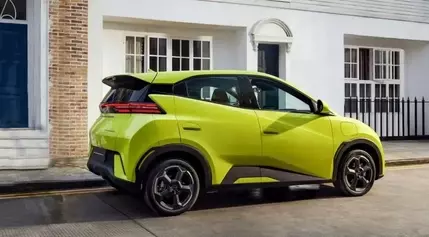
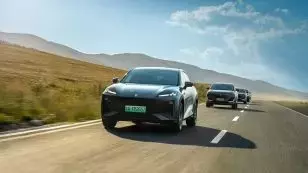
The meteoric rise of Chinese automakers mirrors the trajectory of the Japanese carmakers in America decades ago. Leveraging "elegant, low-cost engineering" and a "low-cost supply base," the Chinese have managed to overturn the established pecking order, offering well-made, affordable vehicles that are "moving at light speed," as Farley puts it. This has left Ford, Stellantis, and General Motors struggling to keep up, with Farley admitting that Chinese EVs are currently ahead of their domestic counterparts.Lessons from the Past
Farley, who started his career in marketing for Toyota, has "seen this movie before" and is drawing on those past experiences to guide Ford's response. Just as Japanese and Korean automakers gained a foothold in the U.S. market in the '80s and '90s, the Chinese are now making inroads, particularly in markets like Brazil and Mexico, where their combustion-powered cars and EVs account for a significant and growing share of sales.Changan's Impressive EVs
Farley's own firsthand experience with Changan's EVs during a 2023 visit to China has been a wake-up call for Ford. The vehicles impressed him so much that he arranged to have several Changan and other Chinese models brought to Michigan for Ford executives to study. Farley has now made "executing to a Chinese standard" the company's top priority, recognizing that even the maker of the best-selling F-Series truck could learn a thing or two about quality and recall avoidance from its Chinese partner.Ford's Cautious Approach in China
Despite the threat posed by Chinese automakers, Ford is taking a cautious approach in the Chinese market, focusing first on the commercial vehicle segment, where it believes it can leverage its strengths in truck and off-road vehicle production. This strategy is driven in part by the significant losses Ford is expecting from its EV efforts, including the Ford F-150 Lightning, which could amount to billion in 2024 alone.Adapting to the Chinese Playbook
To address these challenges, Ford is taking a page out of the Chinese playbook, working on a "low-cost mechanical layout" that can serve as the foundation for several future EVs. This project is expected to yield a midsize EV truck by 2027, which could appeal to buyers in both China and the United States.The Race for the Midsize EV Truck
However, Ford's midsize EV truck won't hit the market until 2027 at the earliest. In the meantime, Chinese automaker Maxus, a sister brand to MG owned by SAIC, has already debuted the first midsize EV truck with four-wheel drive in the UK, the MG Maxus eTerron 9. This vehicle, which is expected to go on sale in 2025, boasts impressive capabilities, including a range of up to 267 miles and a towing capacity of 7,700 pounds.A Changing Global Landscape
While high tariffs are currently keeping Chinese EVs at bay in the U.S. market, Farley still considers them an "immediate threat in Europe and other overseas markets, and a long-term risk in Ford's profit engine of North America, regardless of protectionist measures." The global automotive landscape has shifted, and the once-dismissive attitude of the Detroit Big Three towards Chinese automakers has given way to a newfound respect and urgency to catch up.





































![‘The Casting of Frank Stone’ Is a Solid Entry in the ‘Dead by Daylight’ Universe [Review]](https://img.royaweb.io/news/0d5270dc8a009de2b9e23730bae0090d.webp "‘The Casting of Frank Stone’ Is a Solid Entry in the ‘Dead by Daylight’ Universe [Review]")