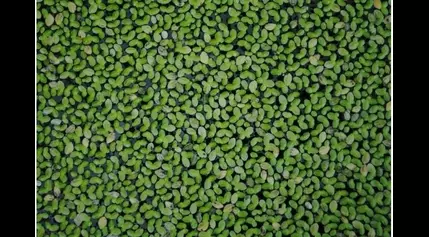
Duckweed, a small aquatic plant, could revolutionize the food of tomorrow
Duckweed: The Unsung Protein Powerhouse Poised to Transform the Future of Food
In a world where sustainability and nutritional security are paramount, a small, unassuming aquatic plant is poised to revolutionize the way we think about food. Duckweed, a humble yet remarkable organism, has the potential to become a game-changer in the global quest for a more resilient and protein-rich food supply.Unlocking the Untapped Potential of Nature's Protein Treasure
A Protein-Rich Revelation
Duckweed, a diminutive aquatic plant found in freshwater bodies around the world, has long been a staple in certain regions of Southeast Asia, where both farm animals and humans have been consuming it for decades. However, its true potential as a protein-rich powerhouse has only recently come to light. Researchers in the field of food science have uncovered the remarkable fact that duckweed can contain up to 45% protein, making it an exceptional source of this essential nutrient.Compared to the world's most widely grown legume, soybeans, which produce between 0.6 and 1.2 tons of protein per hectare, duckweed has the ability to yield a staggering 10 to 18 tons of protein per hectare. This astounding productivity, coupled with the plant's rapid growth rate – doubling in quantity in less than 48 hours – has sparked a renewed interest in harnessing the power of this unassuming aquatic plant.Overcoming the Challenges of Protein Extraction
While the potential of duckweed as a protein-rich food source is undeniable, the process of extracting and utilizing the protein has presented a significant challenge. The main protein found in duckweed, Rubisco, is trapped within the plant's cells, surrounded by other compounds that can impart undesirable colors and flavors. This has limited its usefulness as a food ingredient.Conventional methods of protein extraction, involving extensive grinding, heating, and chemical separation, have resulted in significant losses, with only 5% to 25% of the proteins being successfully recovered. This has hindered the widespread adoption of duckweed proteins in the food industry.A Breakthrough in Protein Extraction
Determined to unlock the full potential of duckweed proteins, a team of researchers has developed an innovative experimental protocol that has led to a remarkable breakthrough. Through the use of statistical modeling, the researchers were able to identify the optimal conditions for pH, temperature, and concentration to maximize the extraction and purification of proteins from duckweed.The result of their efforts is a Rubisco concentrate protein flour with an exceptional yield of 60% – one of the highest ever reported in the scientific literature. This protein concentrate not only boasts excellent solubility in water but also possesses the ability to form foams, gels, and emulsions, making it an ideal ingredient for a wide range of food applications.Towards a Sustainable and Nutritious Future
The implications of this breakthrough in duckweed protein extraction are far-reaching. Beyond its potential use in food formulation, the researchers believe that duckweed proteins could also play a significant role in the field of human nutrition and health. Some of the molecules found in duckweed have shown promise in helping to reduce high blood pressure, further expanding the plant's versatility and value.As the world grapples with the challenges of feeding a growing population while ensuring sustainability and nutritional security, the emergence of duckweed as a viable protein source offers a glimmer of hope. With its remarkable protein content, rapid growth rate, and versatile applications, this unassuming aquatic plant could very well become the key to unlocking a more sustainable and nutritious food future for all.

























































![‘The Casting of Frank Stone’ Is a Solid Entry in the ‘Dead by Daylight’ Universe [Review]](https://img.royaweb.io/news/0d5270dc8a009de2b9e23730bae0090d.webp "‘The Casting of Frank Stone’ Is a Solid Entry in the ‘Dead by Daylight’ Universe [Review]")