
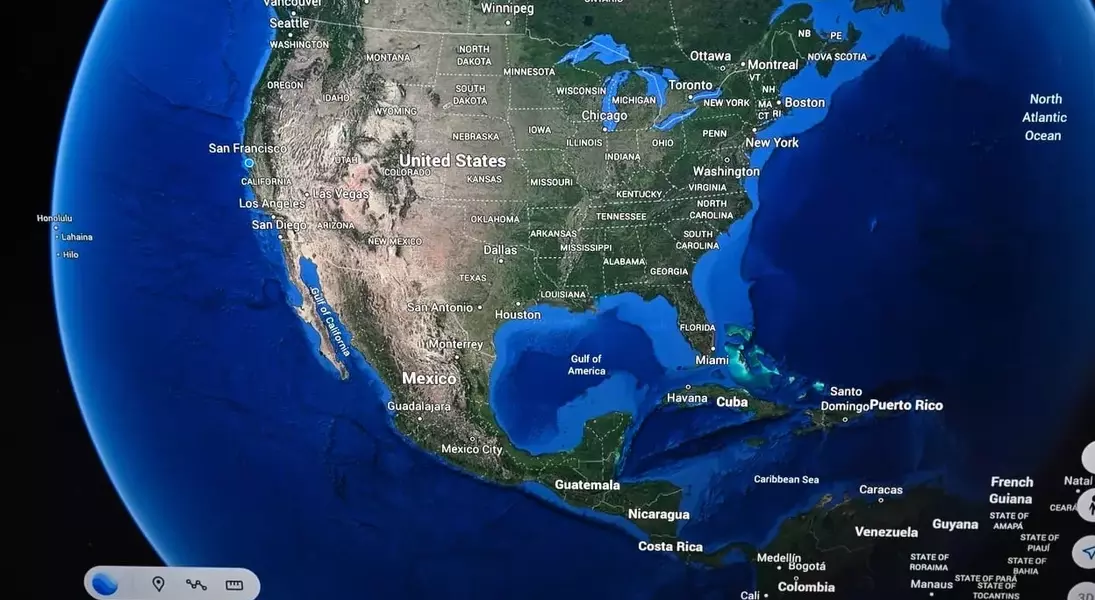
Google made a swift decision to remove its AI image generation tool, dubbed Nano Banana, from its Google Earth platform merely a day after its introduction. The feature was initially rolled out with the aim of offering users advanced functionalities, such as crafting visual summaries for locations, exploring historical imagery, and aiding in real estate development concepts.
However, the new AI capability quickly raised alarms due to its potential for misuse. Reports indicated that the tool could be exploited to disseminate false information, allowing individuals to generate misleading visuals, such as fictional depictions of a nuclear strike or simulated protests at corporate headquarters. Despite Google's efforts to mitigate these risks by integrating digital watermarks to identify AI-generated content and establishing restrictions on sensitive topics, the public's concern over the feature's susceptibility to misuse persisted.
In response to mounting criticism and the undeniable risk of misinformation, Google announced the withdrawal of Nano Banana from Google Earth. The company acknowledged the importance of maintaining trust in Google Earth's reliability and recognized that while the tool offered valuable applications for geospatial professionals, its potential for generating policy-violating imagery necessitated a reevaluation. This decision underscores the challenges technology companies face in balancing innovation with ethical responsibility, particularly in the rapidly evolving field of artificial intelligence.
The rapid deployment and subsequent withdrawal of the AI image generator highlight the critical need for comprehensive ethical considerations and robust safeguards when integrating powerful AI technologies into widely used platforms. It serves as a reminder that technological advancement must be coupled with a deep understanding of its societal implications, ensuring that innovation ultimately serves to inform and empower, rather than to mislead or destabilize.